
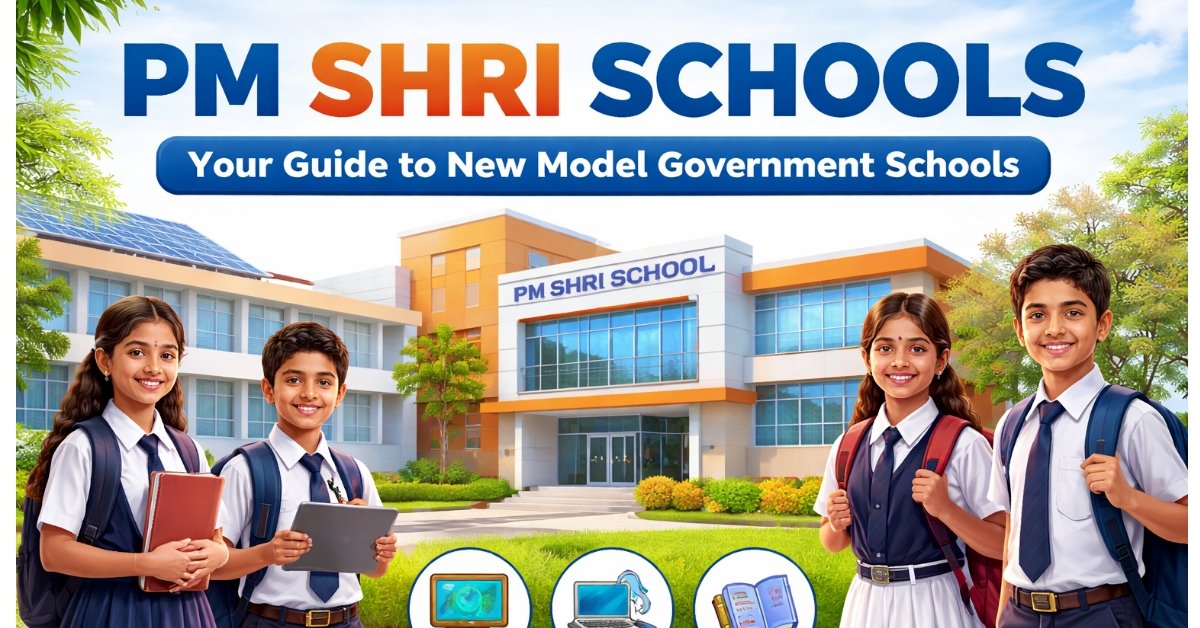
PM SHRI Schools are rapidly becoming one of the most discussed education reforms in India. Parents, especially from middle-class and rural backgrounds, are actively searching for reliable information because this scheme promises something that many families have wanted for years: high-quality education in government schools with modern facilities, English-medium teaching, and strong future readiness for children. This initiative is closely linked with the vision of transforming India’s education system under the National Education Policy 2020. Rather than focusing only on exams and marks, PM SHRI Schools aim to build skills, confidence, and practical knowledge from an early age.
PM SHRI School Concept
PM SHRI stands for Pradhan Mantri Schools for Rising India. These schools are designed to act as model government schools across the country. The main objective is to upgrade selected government schools so they reflect the spirit and goals of the new education policy.
Unlike traditional government schools that often struggle with infrastructure and resources, PM SHRI Schools are developed as well-equipped institutions. They are meant to demonstrate how quality education can be delivered within the public education system itself. Each selected school also serves as a mentor school for nearby government schools, helping raise overall education standards in the region.
PM SHRI Schools Are Gaining So Much Attention
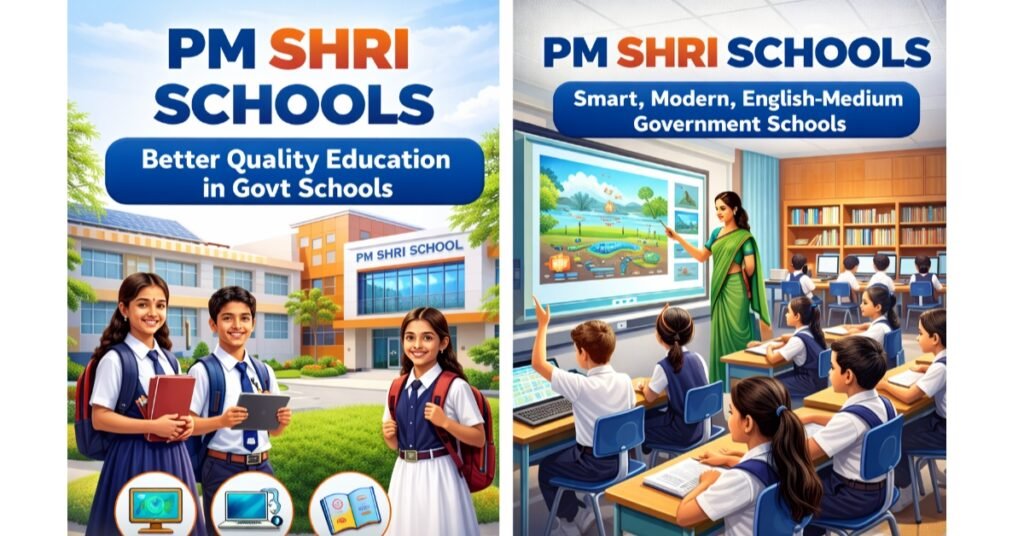
The growing popularity of PM SHRI Schools is driven by real changes that parents can see and experience. These schools focus on creating an environment where students enjoy learning and feel motivated to attend school regularly. The emphasis is on conceptual understanding instead of rote memorization. Teaching methods are updated, classrooms are redesigned, and teachers are trained to adopt modern educational practices. For parents who previously felt private schools were the only option for quality education, PM SHRI Schools offer a strong alternative.
Smart Classrooms and Modern Teaching Methods
One of the most attractive features of PM SHRI Schools is the introduction of smart classrooms. Lessons are supported with digital boards, visual presentations, and interactive content. This approach helps students understand complex topics more easily, especially in subjects like science and mathematics. Teachers use videos, animations, and digital tools to explain concepts in a way that keeps students engaged. This also improves attention span and classroom participation. Smart classrooms are particularly beneficial for first-generation learners, as visual learning reduces dependence on rote textbook reading.
How to build an AI-powered niche blog that ranks fast
Digital Labs and Technology Exposure
Digital labs are another major reason parents are interested in PM SHRI Schools. Students get hands-on exposure to computers, basic programming concepts, and digital tools from an early stage. In many schools, virtual labs are introduced where students can perform experiments digitally when physical resources are limited. This early exposure helps children become comfortable with technology, which is essential in today’s world. It also prepares them for future academic paths related to science, technology, engineering, and mathematics. For students from rural or economically weaker backgrounds, this access can be life-changing.
English Medium Education in Government Schools
English-medium education is one of the strongest attractions of PM SHRI Schools. Many parents believe that English communication skills play a major role in higher education and employment opportunities. PM SHRI Schools address this demand while still respecting regional languages. The focus is not on forcing English but on gradually building language confidence. Students are encouraged to speak, read, and write in English through activities, presentations, and interactive sessions. At the same time, mother tongue and regional languages are used where necessary to ensure clarity and understanding, especially in early grades.
Teacher Training and Quality Improvement
Infrastructure alone cannot improve education without capable teachers. Under the PM SHRI initiative, teachers receive regular training aligned with modern teaching practices. This includes student-centered learning, use of digital tools, assessment reforms, and classroom management techniques.
Faceless YouTube Channel Ideas: Earn without showing your face
Teachers are encouraged to move beyond traditional lecture-based teaching. Group discussions, project-based learning, and real-life examples are increasingly used to make lessons more practical and relatable. This shift in teaching style plays a crucial role in improving learning outcomes.
How Schools Are Selected for PM SHRI Status
Not every government school automatically becomes a PM SHRI School. Selection is based on clear criteria such as infrastructure readiness, availability of teachers, student strength, and support from state or union territory governments. Both central government and state government schools can be selected. Once chosen, the school receives funding and guidance for upgradation. The aim is to ensure that these schools truly represent high standards and can be replicated across the education system.
PM SHRI School List and How to Check It
One of the most common questions parents ask is how to find the PM SHRI School list. The list is released officially by education authorities and is usually available state-wise and district-wise. Parents can check state education department websites or official notifications to confirm whether a school in their area has been selected. It is important to avoid relying on unofficial sources, as misinformation is common. Schools themselves also display their PM SHRI status once officially approved.
Admission Process in PM SHRI Schools
Admission in PM SHRI Schools generally follows the existing admission rules of government schools in that particular state. There is no separate national-level entrance exam for PM SHRI Schools. Admissions are based on age criteria, residence norms, and seat availability.
Some states follow an online admission system, while others allow offline applications through the school office. Required documents usually include birth certificate, address proof, previous class records, and caste or income certificates if applicable. Parents are advised to stay updated through official announcements, as admission timelines and procedures may vary from state to state.
Monetize AI: Top 10 Passive Income Ways with Free Google & Other AI Tools
Facilities Beyond Academics
PM SHRI Schools also focus on overall student development. Many schools include sports facilities, activity rooms, libraries, and art and music spaces. Health and hygiene are given importance through clean drinking water, proper sanitation, and regular health check-ups. Environmental awareness is another key area. Schools are encouraged to adopt eco-friendly practices such as solar energy use, waste management, and green campus initiatives.
Why PM SHRI Schools Are Important for India’s Future
PM SHRI Schools represent a shift in how government education is perceived in India. They aim to bridge the gap between private and public education by offering modern facilities, trained teachers, and future-ready learning environments without high fees.
For millions of families, this scheme offers hope that quality education does not have to come at a high cost. As more schools are added and implementation improves, PM SHRI Schools have the potential to reshape India’s education landscape in a meaningful way.